
The U.S. Department of the Treasury announced new counterterrorism sanctions on 16 January 2026 targeting individuals, companies, and a vessel linked to Iran-backed Ansarallah, also known as the Houthis.
The Office of Foreign Assets Control said the action aims to disrupt oil smuggling, weapons procurement, and illicit financial networks operating across Yemen, Oman, and the United Arab Emirates. The designations were issued under existing U.S. legal authorities to limit revenue and logistics channels supporting regional attacks.
Introduction
The U.S. Department of the Treasury’s Office of Foreign Assets Control released a statement in Washington on 16 January 2026 announcing a new round of sanctions related to Houthi financial and logistics networks. The action named individuals, entities, and one vessel accused of supporting the group’s revenue generation and procurement activities.
The announcement was issued under counterterrorism authorities and forms part of ongoing U.S. measures to restrict the flow of funds, equipment, and services connected to Ansarallah’s operations in the Red Sea region.
Treasury announcement and legal authority
The Treasury Department confirmed that 21 individuals and entities, along with one vessel, were designated by OFAC under Executive Order 13224, as amended. The order provides authority to block property and interests linked to organisations and individuals identified as supporting terrorism.
Additionally, the U.S. Department of State designated Ansarallah as a Specially Designated Global Terrorist in February 2024 and as a Foreign Terrorist Organization in March 2025, establishing the legal framework cited by Treasury for the latest enforcement action.
Sanctions authority and scope
| Issuing body | U.S. Department of the Treasury, Office of Foreign Assets Control |
| Legal authority | Executive Order 13224, as amended |
| Designation status | Ansarallah listed as SDGT (February 2024) and FTO (March 2025) by the U.S. Department of State |
Targets of the sanctions action
OFAC identified companies and individuals in Yemen, Oman, and the United Arab Emirates as part of what it described as revenue generation and facilitation networks. The Treasury Department said these targets were involved in transferring oil products, procuring weapons and dual-use equipment, and providing financial services to the Houthis.
Meanwhile, the designations also covered front companies and shipping facilitators accused of enabling transactions and logistics routes that support the group’s activities in the Red Sea and surrounding regions.
- Individuals and entities designated across multiple countries
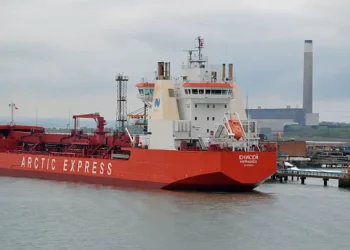
- Vessel identified for oil delivery to Houthi-controlled ports
Designated persons and entities
| Oil facilitators | Companies based in the UAE identified by OFAC as supporting Houthi oil transactions |
| Logistics firms | Shipping and trading entities named for transporting equipment and fuel shipments |
| Exchange houses | Financial intermediaries in Yemen cited for facilitating procurement payments |
Oil smuggling and revenue generation networks
The Treasury Department stated that the Houthis continue to derive substantial income through illicit oil sales and related financial channels. OFAC said Iranian-linked companies and front firms in the UAE were used to move funds and coordinate shipments to Houthi-controlled ports.
However, the agency also noted that certain vessels continued deliveries after humanitarian wind-down periods, providing what it described as economic support to a group designated as a terrorist organisation under U.S. law.
- Front companies facilitating oil sales
- Shipping routes linked to Houthi-controlled ports
Stakeholder Comments
Treasury leadership remarks
Scott Bessent, U.S. Secretary of the Treasury said;
“The Houthis threaten the United States by committing acts of terror and attacking commercial vessels transiting the Red Sea. Treasury is taking action to cut off nearly two dozen individuals and entities involved in transferring oil, procuring weapons, and providing financial services for this Iran-backed terrorist organization.”
In Conclusion
The latest OFAC designations expand U.S. measures aimed at restricting financial and logistics networks linked to Ansarallah’s operations in the Red Sea region. By citing Executive Order 13224 and existing State Department designations, the Treasury Department positioned the action within established counterterrorism authorities.
The sanctions framework continues to focus on limiting revenue streams, enforcing compliance obligations, and maintaining oversight of international transactions connected to designated parties.
Sources: U.S. Department of the Treasury, and U.S. Department of State.
Prepared by Ivan Alexander Golden, Founder of THX News, an independent news organization delivering timely insights from global official sources.
Combines AI-analyzed research with human-edited accuracy and context.